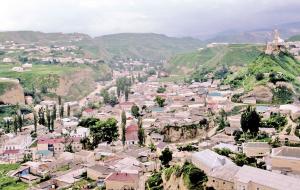
Дагестан — это не просто Страна гор. Прежде всего это страна многочисленных языков и народов, количество которых, несмотря на все усилия ученого мира, до сих пор не установлено достоверно. И у каждого народа свои прославленные аулы. Один аул известен гончарами, другой – знаменитыми мастерами резьбы по камню, третий – сапожниками, четвертый – кузнецами. В одном ауле – хорошие строители мостов и дорог, в другом – прославленные мастера холодного и огнестрельного оружия. Этот аул славен качеством своего зерна, тот – прекрасными яблоками, а другой – капустой и картошкой. В этом ауле ткут ковры, радующие глаз, в другом делают платки и меховые шапки. Одни аулы гордятся учеными, вторые – знатоками арабского языка, третьи – канатоходцами. И в каждом ауле есть свои талантливые музыканты, певцы, танцоры, потому что все народы Дагестана отличаются исключительной музыкальностью. Каждый аул – это маленький мир со своим прошлым, настоящим и будущим. Каждый аул – это уникальный уголок Дагестана, в то ...
Армянское Происхождение Чеченцев (Министерство Чеченской Республики по национальной политике,печати и информации) Древние чеченцы пришли из Урарту на Кавказ, чтобы сохранить свою самобытность, обычаи и адаты .Сегодня мы публикуем статью армянского ученого Араика Оганесовича Степаняна, кандидата философских наук, председателя Политологической Ассоциация Санкт-Петербурга. Решение Араика Степаняня передать свои исследования в «ОГ» неслучайно. Тема, которую он затронул, давно занимала умы чеченских историков. О том, что прародиной вайнахов является древнейшее царство Урарту, писали в своих научных трудах многие ученые. В начале 90-х годов прошлого века историки Армении и Чечни стали совместно заниматься этой темой. К сожалению, после развала СССР и началом военных действий на Северном Кавказе эти контакты были прерваны. Мы надеемся, что после появления этой статьи исследования в этом направлении будут продолжены. По крайней мере, как нас заверили представители армянской общественности в...
The Armenian Community in Thessaloniki: Origin, Organisation and Ideological Evolution I. K. Hassiotis (extract from Queen of the Worthy, Thessaloniki, History and Culture, volume I, History and Society, edited by I. K. Hassiotis, Paratiritis, 1997, pp.296-305) Despite references to the presence of individual Armenians in Thessaloniki as early as the Byzantine period, the history of the Armenian community as much cannot be traced beyond the 18th century, and in fact, the existence of a stable core of Armenians permanently settled in the city is first documented in March 1881. Beginning then in 1881, the history of the community can be divided into three periods: the first ended in the early 1920s when, with the arrival of thousands of Armenian refugees from Eastern Thrace and in Asia Minor, a new phase began, marked by significant changes in its size and social character; the second period ended in 1946-47, when the majority of our Armenian compatriots left Greece to “return” to...
Комментарии
Отправить комментарий